Hello there! Welcome to The Magpie, a newsletter that serves as a collection of shiny objects about writing, creativity, hopes, and obsessions. My current obsession is diaries and the people who write them. Since I started keeping one at age eight, my diary has been a place of exploration and intensity, of lists and favorite quotes, of ticket stubs and wildflowers. It is a place to remember and a place to dream.
My most recent book, The Leaving Season: A Memoir in Essays, is out now! I relied on decades of my own diaries to help me write this book. My next book focuses on historical diaries of women, famous and not, and why we continue to write—and read!—these archives.
This is a Show Me Your Diary interview, a series that explores diaries and the creatives who keep them. Every week, I ask a new person to give us a peek inside their diary process, complete with photos. Yes, we are very nosy!
Thanks for reading The Magpie! Subscribe and never miss a SHOW ME YOUR DIARY interview.
Grief tender Barri Leiner Grant.
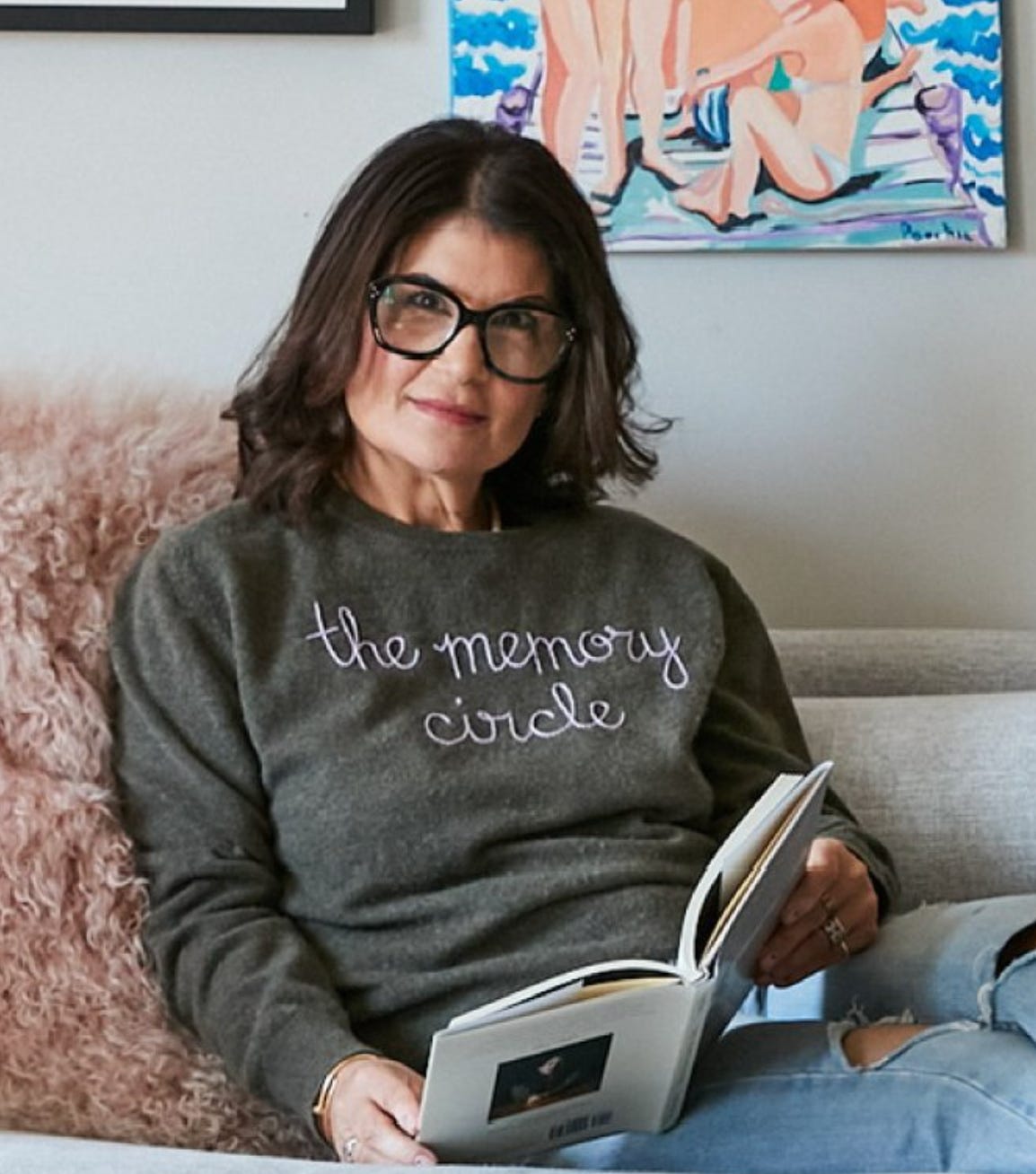
Today’s interview is with Barri Leiner Grant, an expert in grief tending (otherwise known as making space and place for the daily practice of grieving). Decades after her mother died, Barri started The Memory Circle to support others in bringing grief out of the shadows.
What began as a support group for motherless daughters became a circle open to all types of grief, much of which was also her own. “Through miscarriages and divorce, much that was new grief met my old grief and it was a shit show,” Barri writes, in her trademark no-BS style. One instrumental piece of her work in helping mourners make meaning of their grief is through writing it down. (She is running a Grief Camp at Kripalu this September, if you’d like to learn from her IRL.)
Mourning journals often contain magical thinking, as Joan Didion so fiercely and elegantly portrayed in her memoir of her husband and daughter’s deaths. There is a long and agonizingly beautiful history of the form. Roland Barthes, after the death of his mother. Helen Keller, after the loss of her teacher and companion Anne Sullivan Macy. And the aching diaries of Marie Curie after her husband Pierre’s tragic death in a terrible horse and wagon accident one morning, leaving her a single mother to two toddlers and the new head of the laboratory they’d worked in together. Here is a favorite quote from one of those diaries, not quite a month after his death:
14 May 1906
My little Pierre,
I want to tell you that the laburnum is in flower, the wisteria, the hawthorn and the iris are beginning—you would have loved all that.
I want to tell you, too, that I have been named to your chair, and that there have been some imbeciles to congratulate me on it. […]
I want to tell you that I no longer love the sun or the flowers. The sight of them makes me suffer. I feel better on dark days like the day of your death, and if I have not learned to hate fine weather it is because my children have need of it.
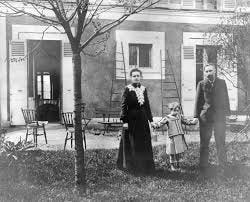
Marie & Pierre with one of their children in the garden, before his death.
Marie continued their work after his death, and five years later she won a Nobel Prize (her second, after the Nobel won with Pierre in 1903) for the isolation of pure radium and the discovery of polonium. In those first years after his death, Marie took over Pierre’s faculty position, making her the first woman ever to teach at the Sorbonne. During that time, as she continued to raise her children and run the lab, she wrote in her mourning diary, addressing a letter to Pierre on every page, day after day.
For many years, starting when I was in 6th grade, my mother worked as a caregiver in hospice. I watched how unafraid of death she became. She stopped being fearful to name it, to call it what it was, and she taught me to do the same. (I wrote about this recently for The New York Times Opinion section.) As Barri teaches in her Memory Circle, naming the dead aloud and asking about them, or writing about them in mourning diaries can act as conduits to our loved ones—or connective tissue, as Barri discusses below. And although mourning is usually associated with darkness, Barri shows how the practice can also bring such joy.
In our interview, I spoke with Barri about losing her summer camp diaries, our mutual affection for Joan Didion’s diaries, and “the Birkin of notebooks.” As always in Show Me Your Diary, Barri gives us a peek inside some of her actual diaries. (Yes, even her Birkin!)
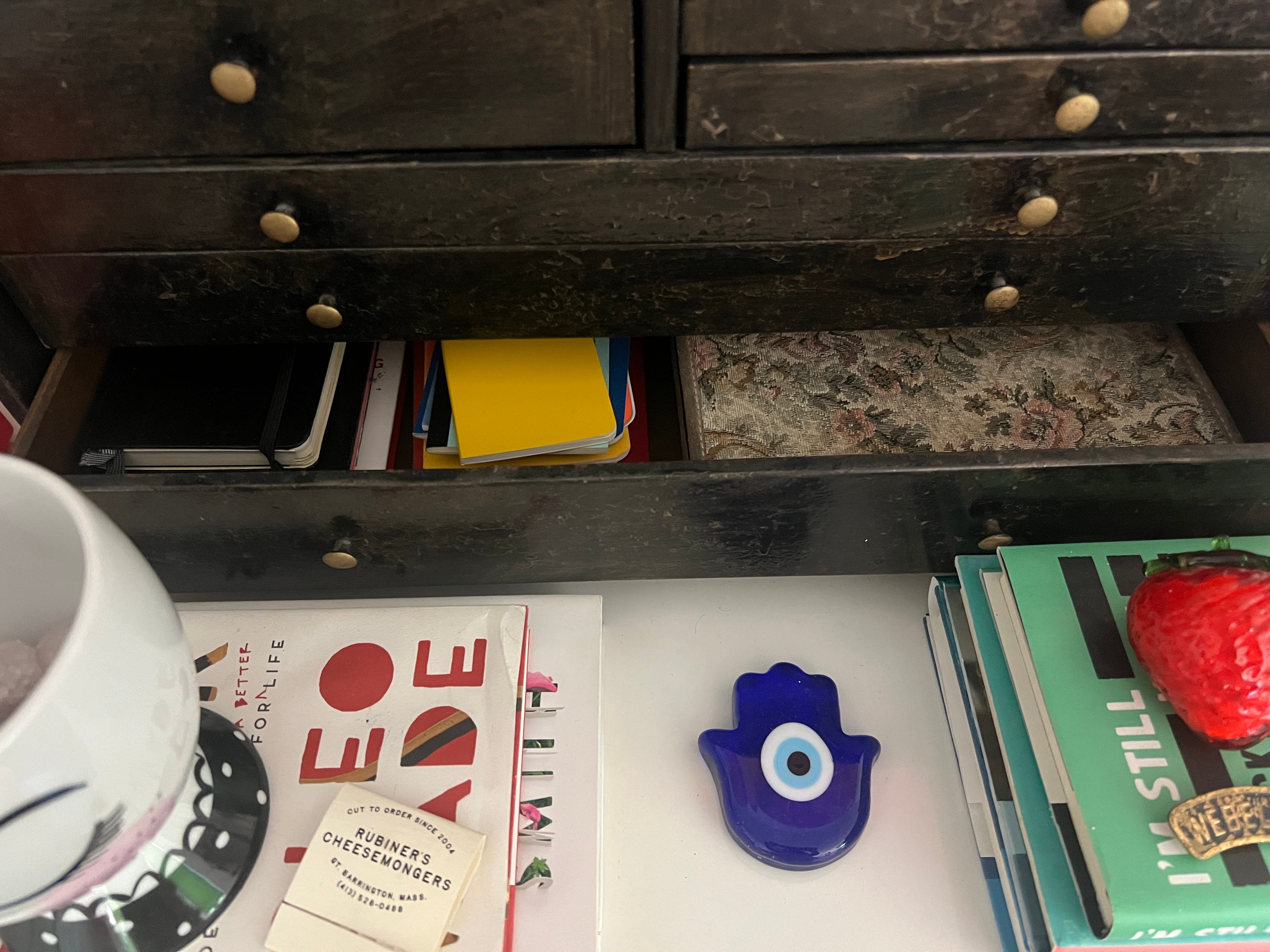
A flat file full of Barri’s journals! (The floral book is her mother’s work journal.)
THE MAGPIE: Team Diary vs Team Journal? What do you like to call it?
BARRI LEINER GRANT: I would have to say, I am a both/and…but inherently more Team Journal. I think it all started the summer after third grade in a 99-cent marble covered composition book.
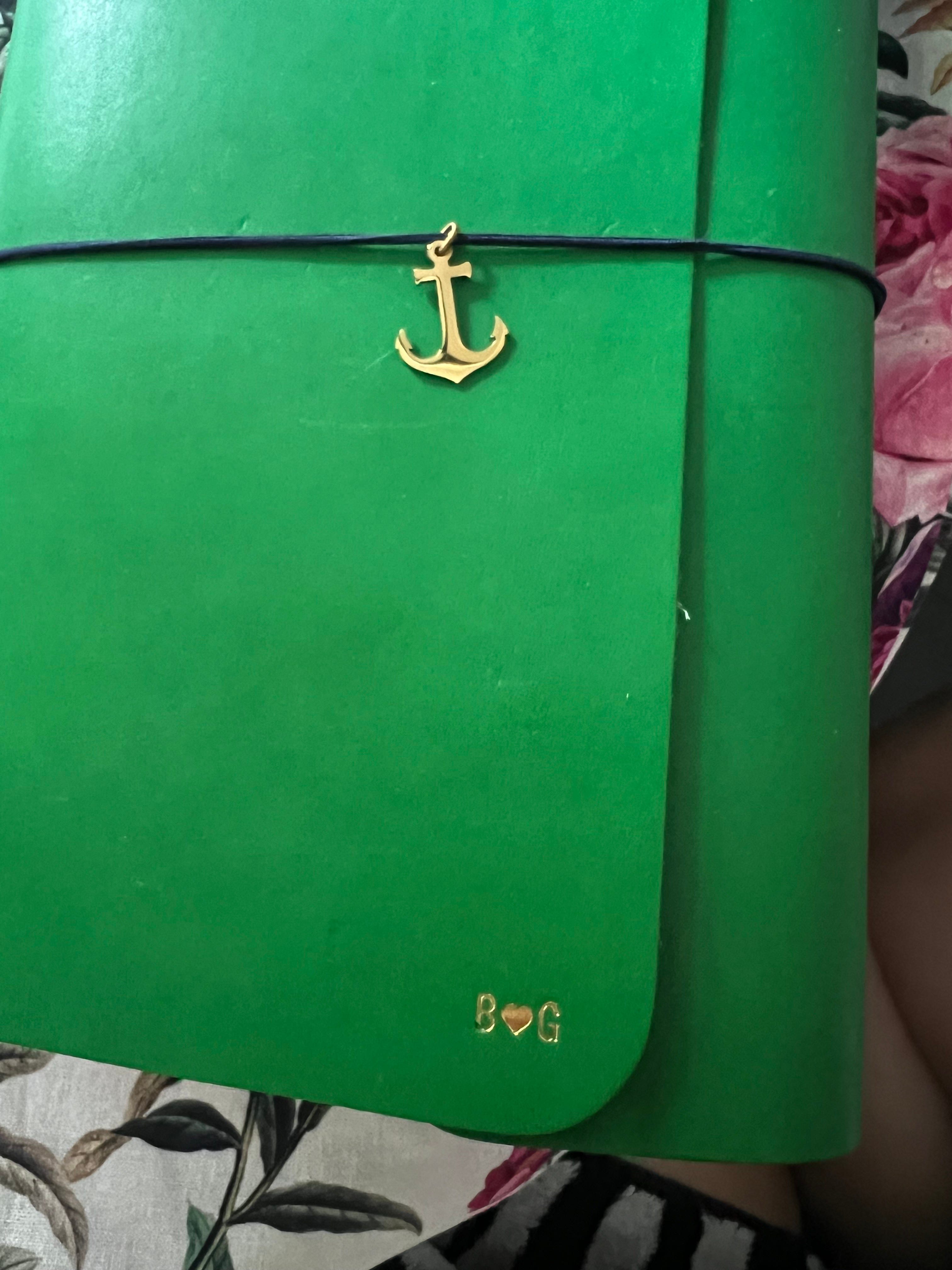
I have and have had diaries and also journals since then. I am very much a journal girl these days. Just this month, I finally treated myself to the holy grail of journals at Louise Carmen of Paris. She is a thing of beauty. Emerald green with a navy elastic, Liberty printed pockets and an anchor charm on front. If you don’t know about them, you do now. So, you are very welcome and I am sorry. Mine is called the Roadbook. She is the Birkin of notebooks if you ask me.
The Louise Carmen Roadbook (otherwise known as Barri’s Birkin).
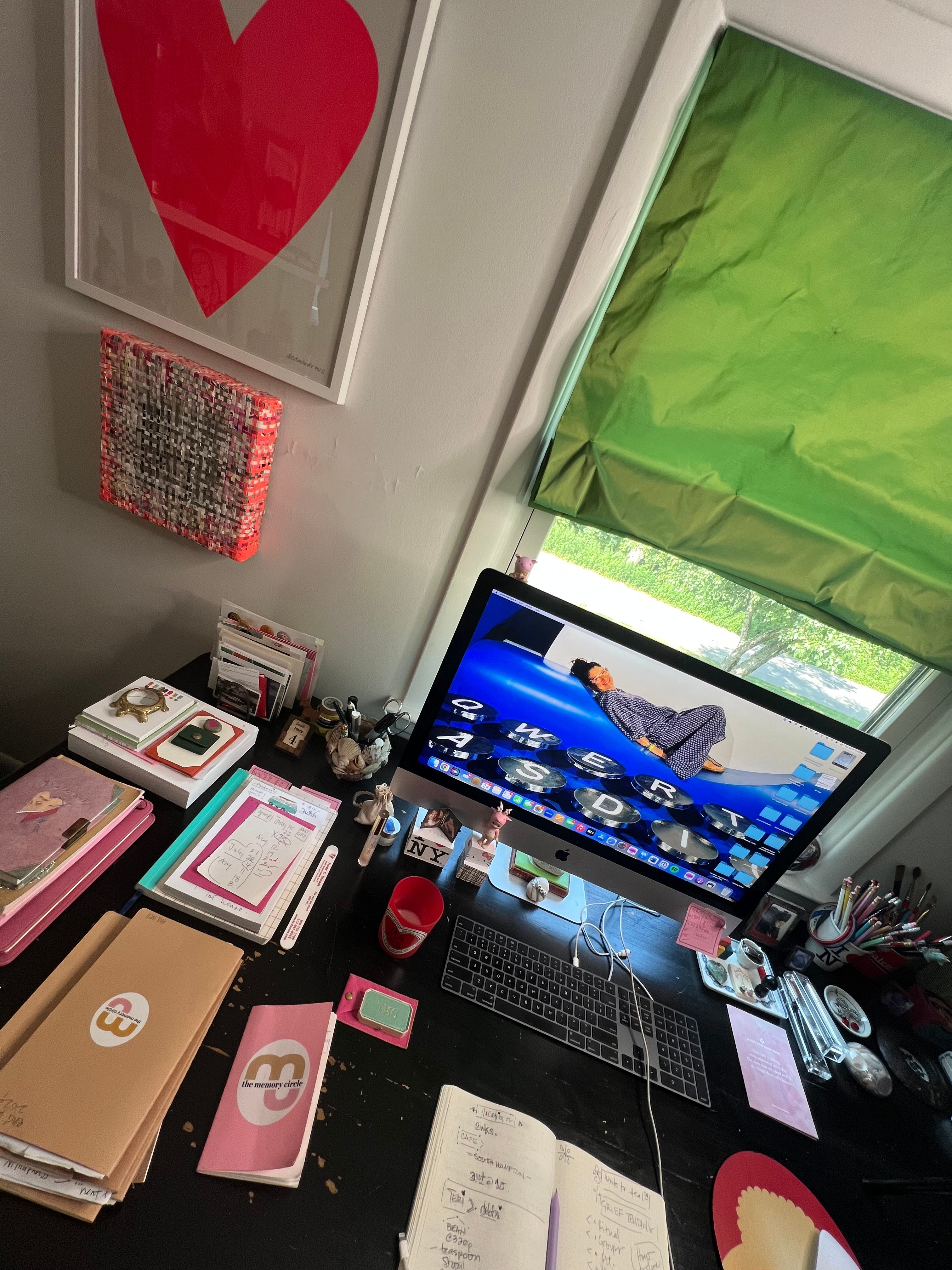
I have only ever had one iteration of a journal that was also refillable. It always felt more for work notes than personal. My LC is personal and beloved. But I will write most everywhere. My notebooks have notebooks and I have been a stationery hoarder since Postalettes were invented. Paper stores in every corner of the world have my heart.
I think it all started the summer after third grade in a 99-cent marble covered composition book.
How long have you kept a journal?
I have been keeping notes on life by paper, pen, and pencil for as long as I can remember. Bits of life have always been tucked inside, backside, front and center. A sticker, receipt, ticket, tiny envelope—even a pressed flower or few.
I packed one with a tiny lock and key in my truck for the eight weeks I headed off to sleep-away summers at Camp Wicosuta. I am really sad to say I have zero idea where they are now. Our family home was packed up and sold after my mother died in my 20s and I am afraid they were tossed with little regard for being the most important memories of my life.
In one I wrote about the amazing plan devised in our final camp summer. There were only six of us in the head cabin, Totem, that year. We stole exactly one cigarette from our counselor Marti and realized we had no matches. I held my hand over the blow dryer vent and it lit the coils fiery orange. We passed it around to try on a puff, all gathered on the back stair of the bunk which overlooked ancient pines and the sacred campfire grounds. Thank God we did not burn down camp and also damn proud of this science-ish ingenuity. I wish I could have that diary back.
One long ago diary kept the details of my folks’ divorce in the Fall of fourth grade. We were the first “broken home” as one teacher called it, in my whole school. I hid that diary way deep under my bed so nobody could see how very bereft it left my aching insides. I remember writing how mad I was that nobody wrote me a note to skip the spelling test the Friday after they told us. I recall getting 100 and thinking this was the way to meet hard things. Show up, don’t talk about it and do well.
It was filled to overflowing with queries about my changing body, outfits and models I admired in the pages of Seventeen Magazine. Some favorites taped inside. It held top secrets on the boys I had a crush on, even the older brother of the O’Herns across the creek. It held dreams of one day being Mrs. Camp Wicosuta. I did get caught in a bunk one summer with the owner’s son during a dance. It was an all-girl’s camp that my Mom and Aunt also attended—thankfully she knew the owners and it did not get me shipped home. Years, later she told me they giggled about it.
A dream workspace (and so many journals!)
What do you hope will happen to your journals once you are gone?
I lean heavily on journaling as a tool for grief tending in my work. As a grief specialist, I encourage clients to keep, toss and burn their writing—whatever suits. I also tell them to be sure they tell someone what they would like to happen to their journals at end of life. I hope my kids, or whoever comes upon mine, will learn a bit about what was going on inside me.
I have the work diary my Mom kept. Her handwriting feels like connective tissue to me.
I don’t have a directive as I have now lost both of my folks and even the tiniest scrap of their writing feels urgent and sacred as a keepsake. There is an aliveness to it that draws me to the handwritten word. I have the work diary my Mom kept. Her handwriting feels like connective tissue to me.
Why do you journal?
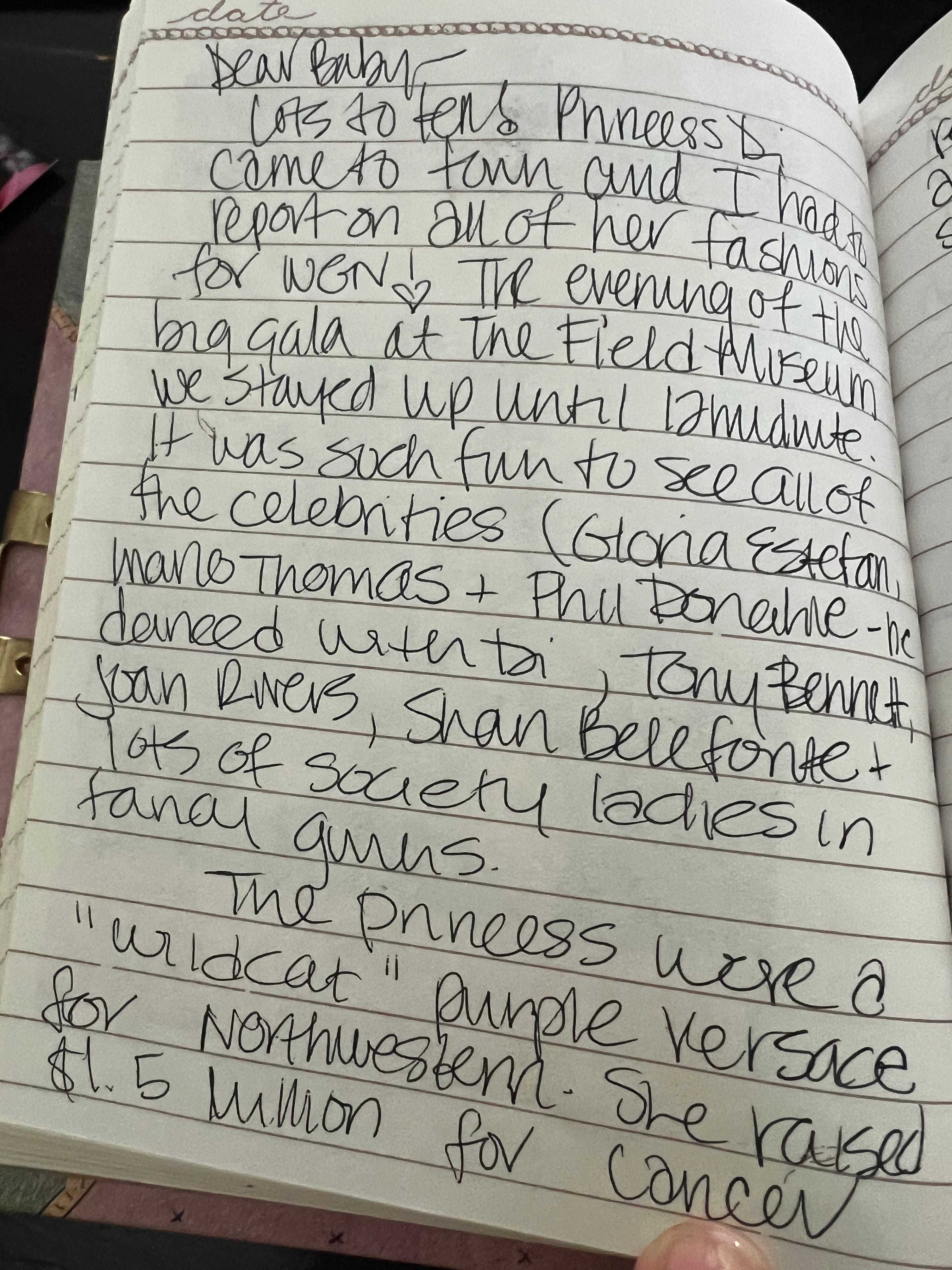
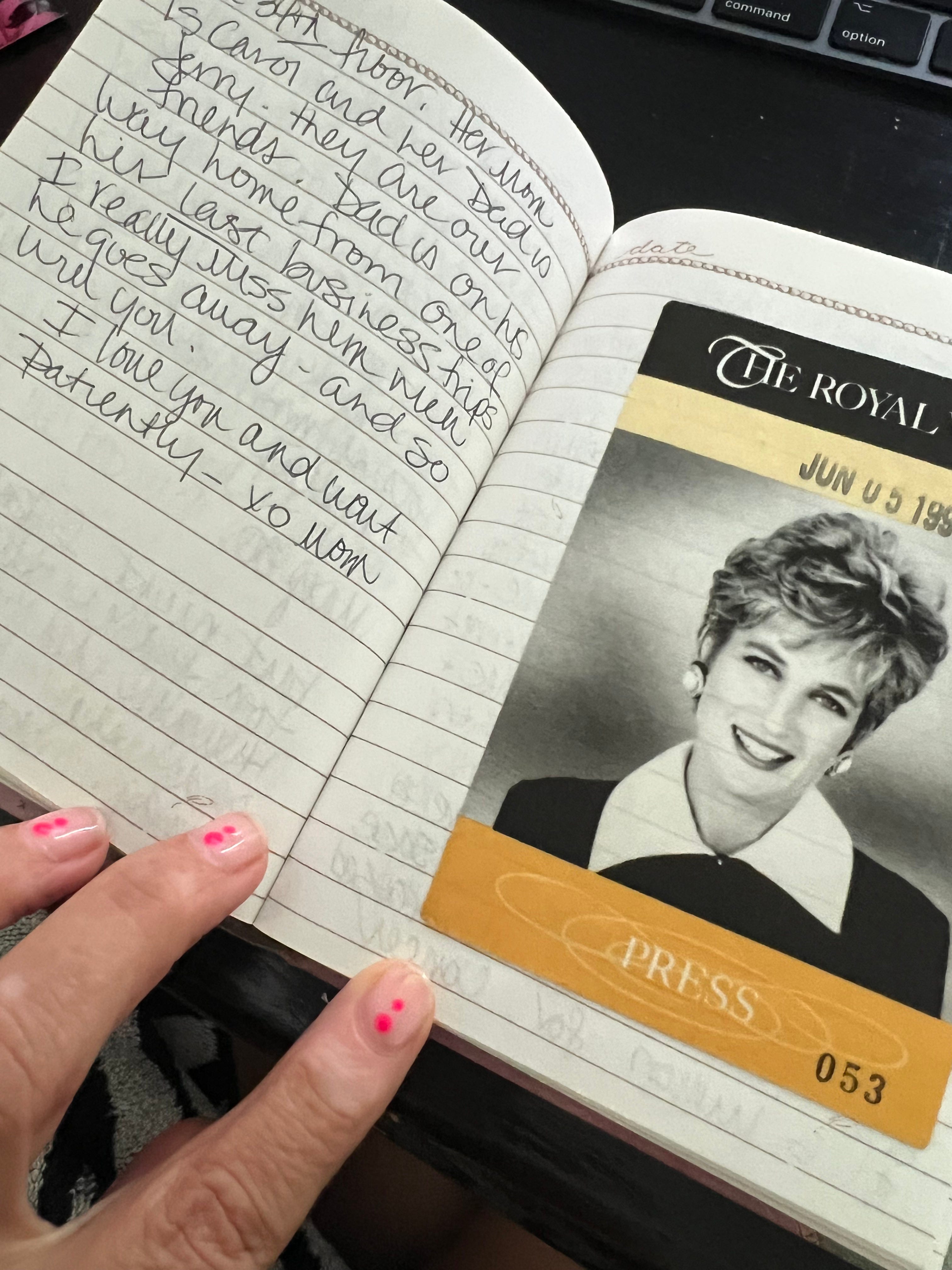
I kept a diary through my entire first pregnancy for “baby.” It was much the same as the pretty pink variety I loved as a kid. We were packing up our family home in Chicago to move East and I came upon it. It is sprinkled with words for them and what was happening “historically” in the city. It holds my press sticker from Princess Diana’s visit to town. I stood 9 months pregnant on the steps of the Museum of Science and Industry with a mic and camera man for WGN-TV. I will give it to my eldest, Emma Jayne, this year after I spend a little more time with the memories.
I have gone through phases of writing Morning Pages, three upon waking, Julia Cameron style. I have written before bed, in the form of a little list of delights. This was inspired by Ross Gay’s The Book of Delights. A notebook and pen are always on my nightstand for 3am brainstorms. Writing it all down helps me return to sleep. I have one in my purse, desk, shelf… The organization is not ideal. I am hoping my new Louise Carmen helps with that…
Have you ever read anyone else’s diary?
The most incredible journal-centric experience I have ever had was to convene with Joan Didion’s diaries when they became part of the archive at The New York Public Library. It felt more like paying homage than spying or prying. I feel like it inspired me to take next steps in writing another book. I marveled at the organization of it all. Her voice sounded much the same there as in her memoir.
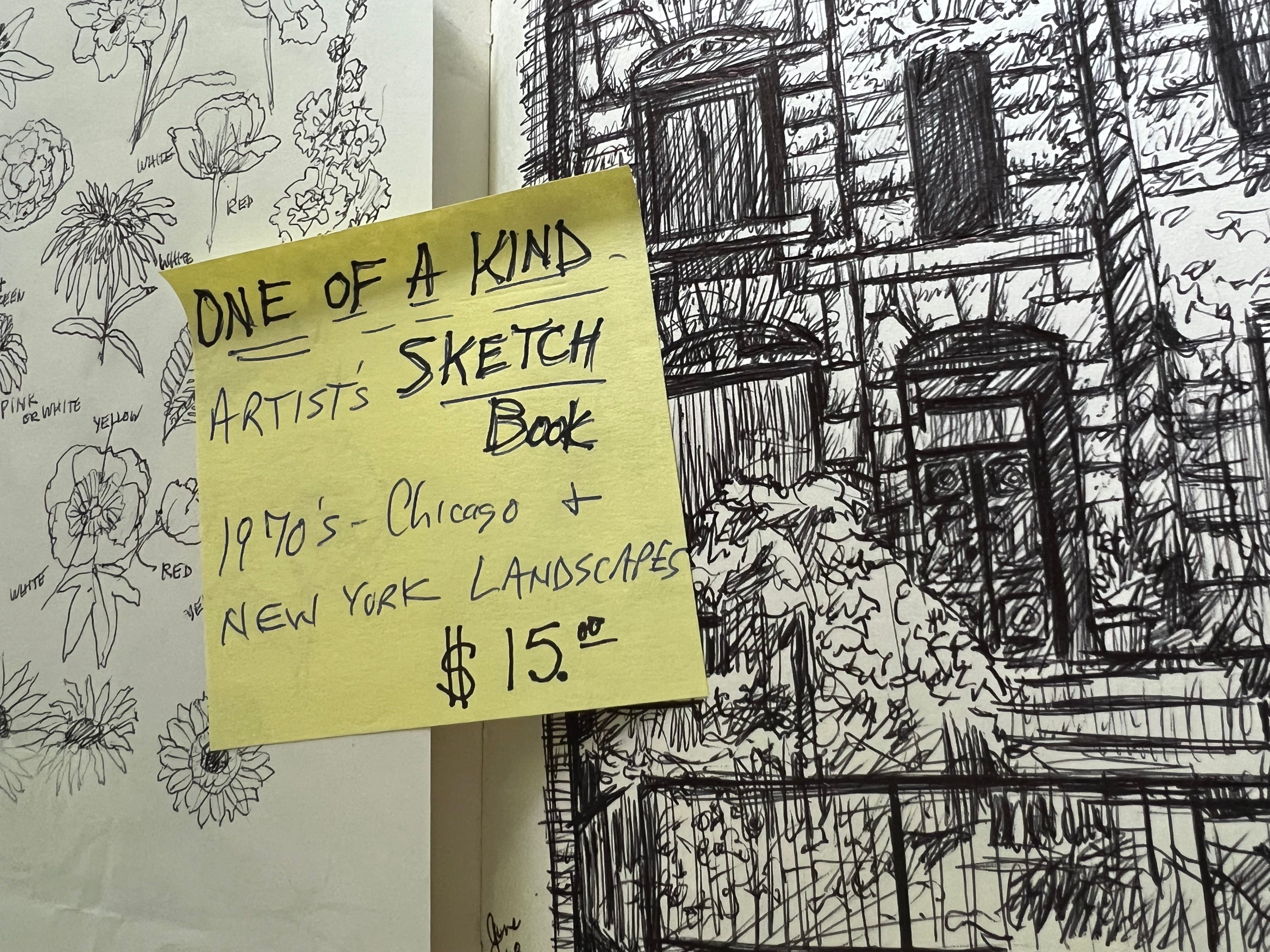
I also read a stunning journal that I stumbled upon at a flea market. I was so moved by it, I wanted to find him or his family and return it to them. And tried! This stranger's etchings and studies took my breath away. He sketched from Chicago and New York--both places I lived. Tiny loose drawings inside. I was never able to make the reunion, so I cherish it.
The stranger’s sketchbook found in a flea market.
What has journaling given to you or taken away?
I have recently become obsessed with Nicole Sachs’ JournalSpeak, a method of journaling to alleviate chronic pain and anxiety. The “writing as healing movement” is of great focus and study for me. Expressive writing, which is credited to James Pennebaker and John Evans’ work, has taken what I always felt intuitively and somehow offered me proof that it has helped to profoundly process the death and non-death losses in my life. It has become a believing mirror for me and in turn, a prominent tool I share in my work. I believe we can make the journal our “safe space”. When you ditch grammar and stunning sentences, I believe you find the freedom to feel and heal.
Barri Leiner Grant is the founder of The Memory Circle (www.thememorycircle.com) for grief support—a place and space she created for those learning to live with loss. She left a longtime career as a journalist and has established herself as a well-respected Grief Specialist and Certified Coach. Barri combines her writing background and yoga/meditation training to craft grief tending tools and modalities for clients and groups. Her work has been featured in The Washington Post, Psychology Today, Maria Shriver’s Sunday Paper, on award winning podcasts, television appearances and radio shows. She frequently hosts retreats at The Omega Institute and Kripalu Center.
In September at Grief Camp at Kripalu Center in the Berkshires, MA
Want to show me your diary? Hit reply and let me know!
Thanks for reading The Magpie by Kelly McMasters! As always, more of what I’m up to can be found on my website, and you can follow me on Instagram for day-to-day updates.
My journals hold all of me. Once I clear probate with my late husband's estate I will write my will to specify exactly what I want done with my journals.
This is wonderful. It encourages me to put in my notebook some griefs that I've been carrying around in my head and body but haven't yet put in my notebook.




My journals hold all of me. Once I clear probate with my late husband's estate I will write my will to specify exactly what I want done with my journals.
This is wonderful. It encourages me to put in my notebook some griefs that I've been carrying around in my head and body but haven't yet put in my notebook.